Root Canal Treatment
Overview of Root Canal Treatment
A tooth consists of three layers: Enamel, Dentin, and Pulp. When decay is confined to the enamel and dentin, a filling or restoration can resolve the issue. However, if decay reaches the pulp, causing inflammation or infection, a Root Canal Treatment (RCT) is required.
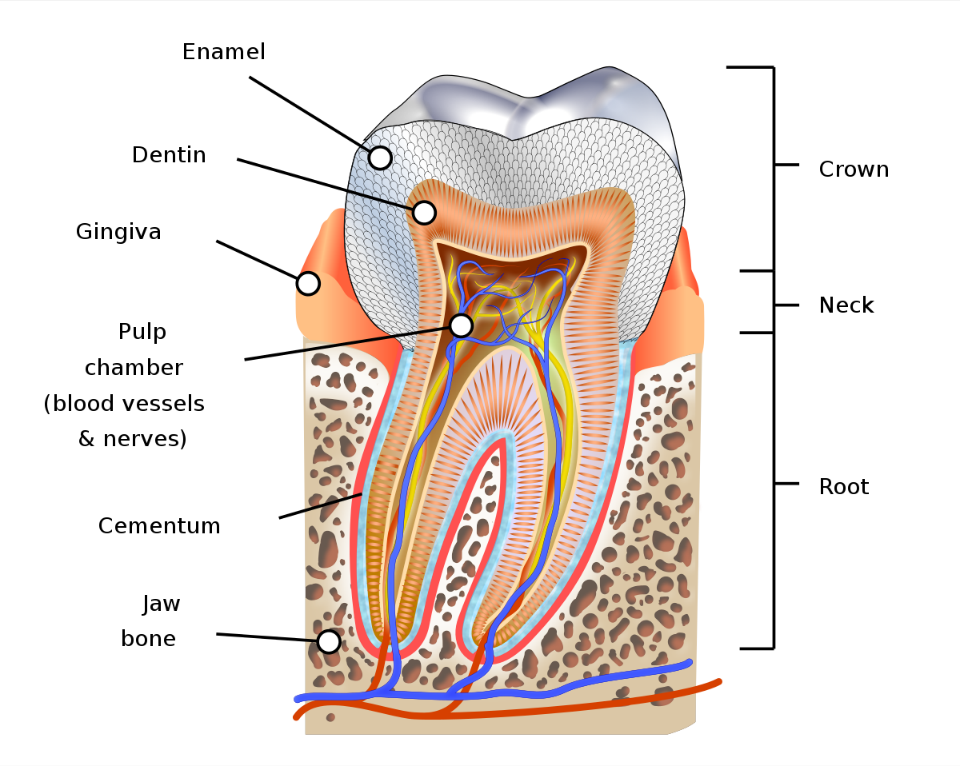
Why is Root Canal Treatment Necessary?
Root Canal Treatment is crucial for several reasons:
- To remove infected pulp and alleviate associated pain.
- To prevent the formation of a Dental abscess, which can cause severe pain, swelling, and damage to surrounding bone.
- To save the tooth from extraction when decay reaches the pulp.
- To address persistent and intense toothache, especially when chewing or applying pressure.
- To treat deep fractures or cracks that expose the pulp to bacteria.
Symptoms Indicating the Need for Root Canal Treatment
- Persistent and intense pain, especially when chewing or applying pressure.
- Increased sensitivity to hot or cold that lingers after removing the stimulus.
- Swelling and tenderness in the gums near the affected tooth.
- Discoloration or darkening of the tooth.
- Pain or discomfort while chewing, biting, or applying pressure.
- Radiating pain from one area of the mouth to another.
Consequences of Not Getting a Root Canal Treatment
Neglecting RCT can lead to significant long-term consequences, including persistent pain, infection spreading to surrounding tissues, abscess formation, facial swelling, and potential tooth loss. Systemic infections may develop, posing a risk to overall health.
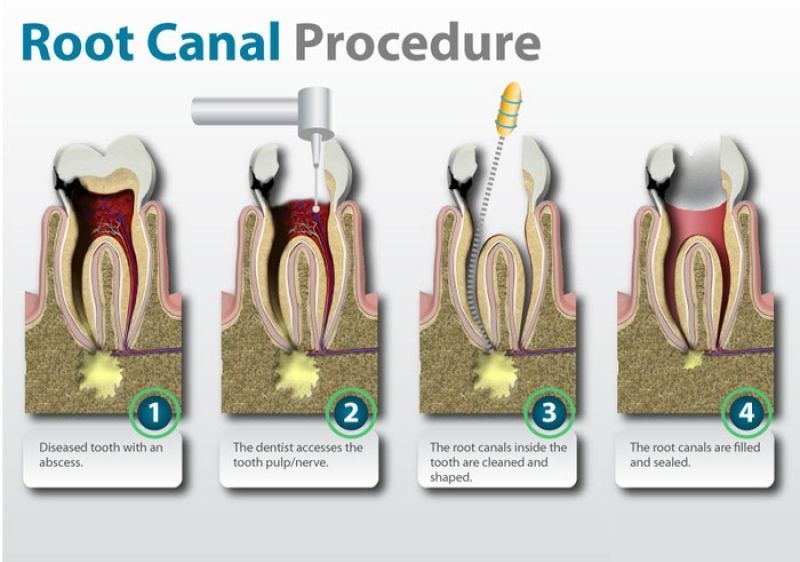
Root Canal Treatment Procedure
- Initial Assessment: An X-ray is taken to determine the extent of infection. Local anesthesia is administered if necessary.
- Cavity Preparation: The dentist prepares a cavity, ensuring all infected material is removed.
- Disinfection and Shaping: The infected pulp is cleared out, and the canals are cleaned and shaped.
- Filling and Sealing: The cleaned canals are sealed with Gutta-Percha.
- Restoration: The tooth is restored with a filling, followed by a crown or cap.
Root Canal Treatment (RCT), also known as endodontic treatment, is necessary when decay extends to the pulp, the innermost layer of the tooth, resulting in inflammation. This procedure is performed as follows.
- Removing the inflamed or infected tooth material.
- Cleaning and disinfecting the canal.
- Filling and sealing the canal with an inert material.
- Restoring the tooth with a crown or cap.
RCT is a multi-step process that usually requires multiple visits.
Post-Treatment Care for Root Canal Treatment
- Avoid putting pressure on the treated tooth until a crown is placed.
- Eat soft foods and avoid hard, crunchy foods.
- Brush gently around the treated area.
- Get a Dental crown promptly to protect the tooth.
- Visit your endodontist if you experience severe pain or complications.
Benefits of Root Canal Treatment
- Relieves severe tooth pain by removing infected pulp.
- Maintains the original tooth structure, avoiding extraction.
- Prevents infection from spreading to adjacent tissues.
- Restores normal biting, chewing, and speech functions.
- Preserves natural teeth and prevents potential issues.
- Maintains jawbone integrity by keeping the natural tooth in place.
- Preserves a natural appearance and smile.
- Long-term savings compared to extraction and replacement options.
- Reduces the chances of forming painful Dental abscesses.
- With proper care, a treated tooth can last a lifetime.
Possible Side Effects of Root Canal Procedure
- Infection risk in the treated tooth.
- Post-operative discomfort or pain.
- Rare risk of Dental instrument breakage.
- Rare nerve damage.
- Risk of tooth crown fracture, especially in weakened teeth.
- Potential for undetected additional canals.
- Tooth discoloration over time.
- Possible issues with filling materials.
Common Myths About Root Canals
- Myth: Root canals are painful.
Fact: Advances in Dental technology and anesthesia make modern root canals relatively painless. - Myth: Advances in Dental technology and anesthesia make modern root canals relatively painless.
Fact: There is no scientific evidence linking root canals to systemic health issues. - Myth:Tooth extraction is a better alternative.
Fact: Saving a natural tooth through a root canal is generally preferred over extraction to avoid issues like misalignment and bone loss. - Myth: A tooth becomes weak after a root canal.
Fact: A tooth that has undergone a root canal is usually reinforced with a crown, providing strength and protection.
Frequently Asked Questions
- What is a Root Canal?
A root canal is a procedure to treat infection or damage in the pulp (nerve) of a tooth by removing the affected tissue and sealing the canal. - How long does a Root Canal last?
Root canal-treated teeth typically last 8 to 10 years. Having a crown fitted after the procedure improves the tooth's survival rate. - Is the Root Canal process painful?
Modern techniques and anesthesia make the process smooth and painless, aiming to relieve pain rather than cause it. - How to know if you need a Root Canal?
Signs include severe tooth pain, sensitivity to hot or cold, swelling, and tenderness in the surrounding gums. - How does endodontic treatment save the tooth?
By removing infected or damaged pulp, cleaning, shaping, and sealing the root canals to prevent further infection. - Will I feel pain during or after the Root Canal?
The area is numbed with local anesthesia during the procedure, and any post-operative discomfort can be managed with medication. - What is the step-by-step endodontic procedure?
The process includes diagnosis, anesthesia, isolation, access, cleaning, shaping, filling, and post-procedure recovery. - Will the tooth need special care after endodontic treatment?
Regular oral hygiene and routine Dental check-ups are essential for long-term care. - Can all teeth be treated endodontically?
Most teeth can be treated with a root canal, but severe damage may require extraction. - What can I eat after a Root Canal?
Soft foods are recommended initially; avoid extremely hot or cold items and follow your dentist's advice. - What to expect after a Root Canal?
Temporary sensitivity or discomfort, manageable with pain medication. - Does a Root Canal kill the tooth?
No, it removes the infected pulp to save the tooth and alleviate pain. - Do you need a crown after a Root Canal?
A crown provides additional support and protection to the treated tooth. - Can a Root Canal fail?
Though rare, failure can occur if there is persistent infection or incomplete sealing, requiring further treatment. - What happens if you don't get a Root Canal?
The infection can spread, leading to severe pain, abscesses, and potential tooth loss. - Do Root Canals cause cancer?
No evidence links root canals to cancer. - Can I brush my teeth after a Root Canal?
Yes, but be gentle around the treated area. - Will a tooth turn black after a Root Canal?
Generally, No. - How many visits does a Root Canal take?
Typically, 3-4 visits, depending on the case complexity. - Can you smoke after a Root Canal?
Avoid smoking to promote healing and prevent complications. - Can I drive after a Root Canal?
Yes, the procedure does not affect driving ability. - What kind of dentist performs Root Canals?
Endodontists and general dentists can perform the procedure. - What is Dental pulp?
The soft tissue inside a tooth containing nerves, blood vessels, and connective tissue. - Why does the pulp need to be removed?
Infected or damaged pulp must be removed to prevent further pain and infection. - What damages a tooth's pulp?
Deep cavities, untreated decay, cracks, trauma, repeated procedures, or faulty crowns can damage the pulp.